
In an electric power system, HV Air Insulated Switchgear is the combination of electrical disconnect switches, fuses or circuit breakers used to control, protect and isolate electrical equipment. Switchgear is used both to de-energize equipment to allow work to be done and to clear faults downstream. This type of equipment is important because it is linked directly to the reliability of the electricity supply.
High voltage switchgear was invented at the end of the 19th century for operating motors and other electric machines. The technology has been improved over time and can be used with voltages up to 1,100 kV. Typically, the switchgear in HV substations is located on both the high voltage and the low voltage side of large power transformers.
Sources: Newton-Evans Research Company
Major suppliers active in the market include Hitachi Energy, GE Vernova, MEPPI and Siemens Energy. In the sub-transmission market segment, additional OEMs include Eaton, FedPac and Schneider. Sub-Transmission (>38.5kV-<110kv) prices ranged from $50,000 – $85,000 on recent year (2022-2024) bid tabulations.
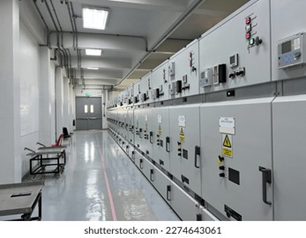
Newton-Evans Research observations suggest that the high voltage air insulated switchgear market in the U.S. is rapidly approaching or by now has surpassed the $1 billion level by year-end 2024.
HV Gas-Insulated Switchgear (GIS) has conductors and contacts that in today’s market are still primarily insulated by pressurized sulfur hexafluoride gas (SF6). Gas insulated switchgear used for transmission-level voltages saves space compared with air-insulated equipment. Although it has a higher initial equipment cost, HV GI switchgear has experienced higher reliability and lower maintenance costs than comparable air-insulated switchgear. Alternative gases to SF6 are currently in development for mid-range HV applications among manufacturers and related GIS service providers. Commercialization of such alternative gases will provide additional growth incentives for potential GIS users.

High voltage gas-insulated switchgear for the U.S. market is manufactured by a relative handful of companies, and the additional key suppliers of MV gas-insulated switchgear include Eaton and Schneider in particular. The U.S. market appears to be about 250-300 bays per year – or about 20-25 HV GIS projects. Newton-Evans Research believes this market is primed for growth over the coming decade, at an AAGR of about 5% to 8% or better. Readers may wish to reference the HV04 overview report on Gas Insulated Substations.
Sources: Newton-Evans Research Company. (2017 landmark study for an HV GIS Market Participant. Updated reviews for another manufacturer completed in 2020. In 2022, a study of the outlook for non-SF6 gases on the market for GI switchgear was undertaken).
Key HV GIS equipment market participants include Hitachi Energy, Siemens Energy, GE Vernova and MEPPI, with HICO America, Hyundai and Toshiba also participating and growing their shares in this emerging market segment, likely to exceed $500 million in shipment values by 2026, in our view.
Dependent upon equipment configuration and voltage levels, prices for GIS equipment researched by Newton-Evans begin at about $100,000 and can easily exceed $1,000,000 for a platform- based, multi-bay EHV unit. Keep in mind that most U.S. HV GIS projects to date have involved between 10-20 bays.
It is important to note that GI switchgear is only one factor (albeit an important factor) in evaluating the cost of a complete HV GIS substation. Also, some gas-insulated switchgear is installed in air-insulated substations. In recent years, HV/MV GIS equipment has also been used in mobile substation applications.
High Voltage Bushings are hollow insulating liners that fit through a metal case (such as a power transformer), allowing a conductor to pass along its center and connect at both ends to other equipment. The purpose of the bushing is to keep the conductor insulated from the surface it is passing through. Bushings are often made of wet process fired porcelain, glazed to shed water. A semi-conducting glaze may be used to assist in equalizing the electrical potential gradient along the length of the bushing.
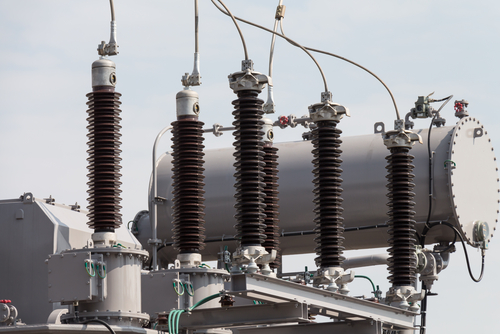
A bushing is an electrical engineering component that insulates a high-voltage conductor passing through a metal enclosure or a building. Bushings are needed on transformers, Buildings, Gas insulated switchgear (GIS), generators and other high-voltage equipment.
The inside of the bushing may contain paper insulation and the bushing is often filled with oil to provide additional insulation. Bushings for medium-voltage and low-voltage apparatus may be made of resins reinforced with paper. The use of polymer bushings for high voltage applications is becoming more common. The largest high-voltage bushings made are usually associated with HVDC converters.
Power transformer manufacturers typically produce bushings for their own equipment. There are a number of specialist producers of bushings and insulators as well (such as Lapp, NGK-Locke, Newell and others).
The HV bushings market is led by Hitachi Energy with a dominant market share of new bushings sold into the U.S. and remains as the leading supplier of replacement bushings for Type U bushings (formerly manufactured by GE) to the Utility and Industrial/Commercial markets in the United States. Newton-Evans estimates that Hitachi ABB currently has a 38-40% U.S. market share for HV bushings. Prior to the acquisition of ABB Power Grids, Hitachi held about an 8% share of the U.S. market for HV bushings, and ABB held about a 29%+ share.
An excellent reference article on HV/MV bushings can be found here on the INMR website: http://www.inmr.com/overview-world-markets-insulators-bushings-2/2/
Sources: Newton-Evans Research Company, Hitachi Energy, Trench
Bushing prices for HV installations range from about $2,500 upwards of $25,000 for an EHV bushing. (Price dependent upon country of manufacture, quantity, voltage, materials – polymer, porcelain, rubber, composite, etc.) One recent PJM study estimated an HV breaker bushing cost of $500,000. Note that while the HV bushings market in the U.S. is about $150-$180 million, the MV bushings market is larger, perhaps approaching $220 million, with more suppliers available. (Newton-Evans estimate).
High Voltage Power Capacitors play a key role in the transmission of electrical energy and are present in HVDC systems as well as in FACTS. (Trench). A power capacitor is an assembly of dielectric and electrodes in a container (case), with terminals brought out, that is intended to introduce capacitance into an electric power circuit (IEEE).
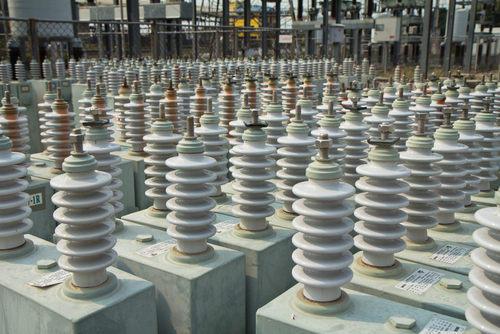
According to the Eaton Corporation, a capacitor is a device that stores energy within an electric field. This is achieved by having two oppositely charged electrical conductors separated by dielectric materials. Power capacitors are constructed of several smaller capacitors commonly referred to as “elements,” “windings” or “packs.” These elements are formed from multiple layers of aluminum foil (conductors) and polypropylene film (dielectric) wound together. When interconnected, multiple elements combine to function as a single capacitor unit. Elements are connected in series based on rated voltage, and in parallel based on required kvar. The completed module is enclosed in a hermetically sealed tank, and any air from the unit is removed and replaced with a dielectric fluid. Units include bushings with terminal caps, that are used as connection points and to maintain electrical creepage and clearance requirements.
Sources: IEEE, Trench Group, Eaton Corporation, Newton-Evans Research Company
Average Price Ranges
For MV ranges, unit prices per price lists and a few bid sheets suggest current pricing is from $1,200-$4,900 depending upon voltage, KVAR, phases (1 or 3) and placement components. For HV range applications above 69kv, we could not find pricing information that is current enough to be listed here. However, based on one manufacturer’s configuration options page, HV 600KVAR units appear to be in the $17,000 and higher range.
Some recent cost estimates published by various ISO/RTO organizations include:
• 12 MVAR 115kV unit = $1 million
• 24 MVAR 115kV unit = $500,000
• 100 MVAR 138kV unit = $2 million
• 360 MVAR 230kV unit = $1.7 million
• 150 MVAR 230kV unit = $1.25 million
• 130 MVAR 230kV unit = $1.0 million
• 150 MVAR 500kV unit – $1.5 million
A High Voltage Circuit Breaker (popularly known as HV CB or HV breaker) is an automatically operated electrical switch designed to protect an electrical circuit from damage caused by overload or short circuit. Its basic function is to detect a fault condition and, by interrupting continuity, to immediately discontinue electrical flow.
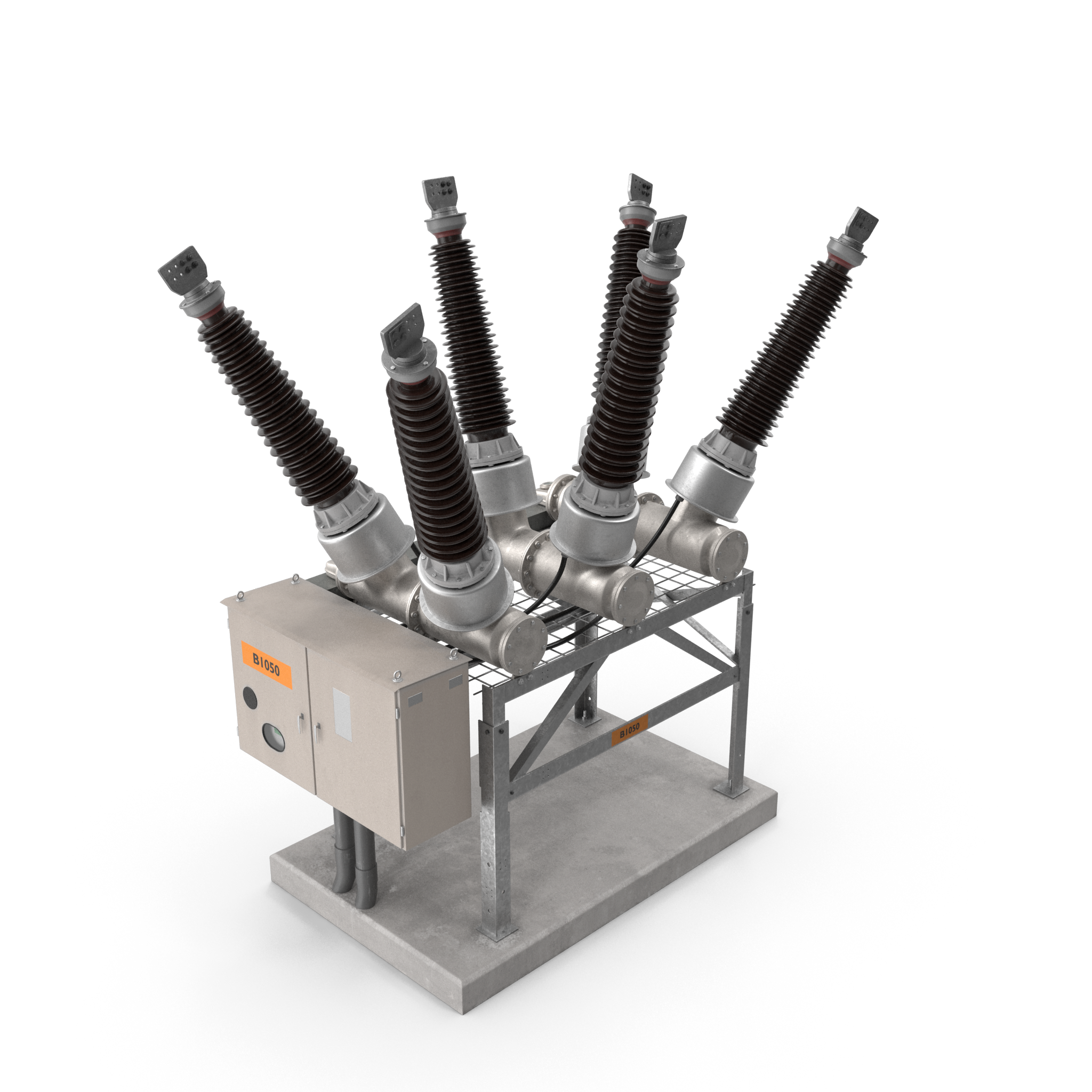
Electrical power transmission networks are protected and controlled by high-voltage breakers. The definition of high voltage varies but in power transmission work is usually thought to be 72.5 kV or higher, according to a recent definition by the International Electrotechnical Commission (IEC). High-voltage breakers are nearly always solenoid-operated, with current sensing protective relays operated through current transformers. In substations the protective relay scheme can be complex, protecting equipment and buses from various types of overloads or ground/earth faults. These units may be oil-based, air, vacuum or SF6 or other gas medium.
There are multiple sub-segments of the circuit breaker market based on specific kV ranges/offerings. The top tier manufacturers are competitive in each range from 72kV through 765kV – slight changes in leadership share positions in each sub-segment. GCB shipment values are excluded in the above totals – Generator circuit breakers are covered in the HV15 Market Overview. In the 550kV and higher classes, HICO and MEPPI are co-leaders, along with Hitachi Energy, GE and Siemens.
Some recent cost estimates published by the ISO/RTO community include:
• 138kV 63kA breaker = $280,000
• 138kV 2000A breaker = $500,000
• 230kV 80kA breaker = $1.3 million
• 345kV 63kA breaker = $1.08 million
Lower kV ranges of HV breakers (<245kV) account for about 57% of all HV unit shipment values (Newton-Evans estimates). As the U.S. adds additional new/uprated transmission capacity each year, the kV range continues to increase, albeit slower than anticipated over the last decade, but it may that 245kV, 362kV and even 550 kV unit shipments will eventually outpace growth of lower kV range units.
 summary reviews and highlights from completed studies